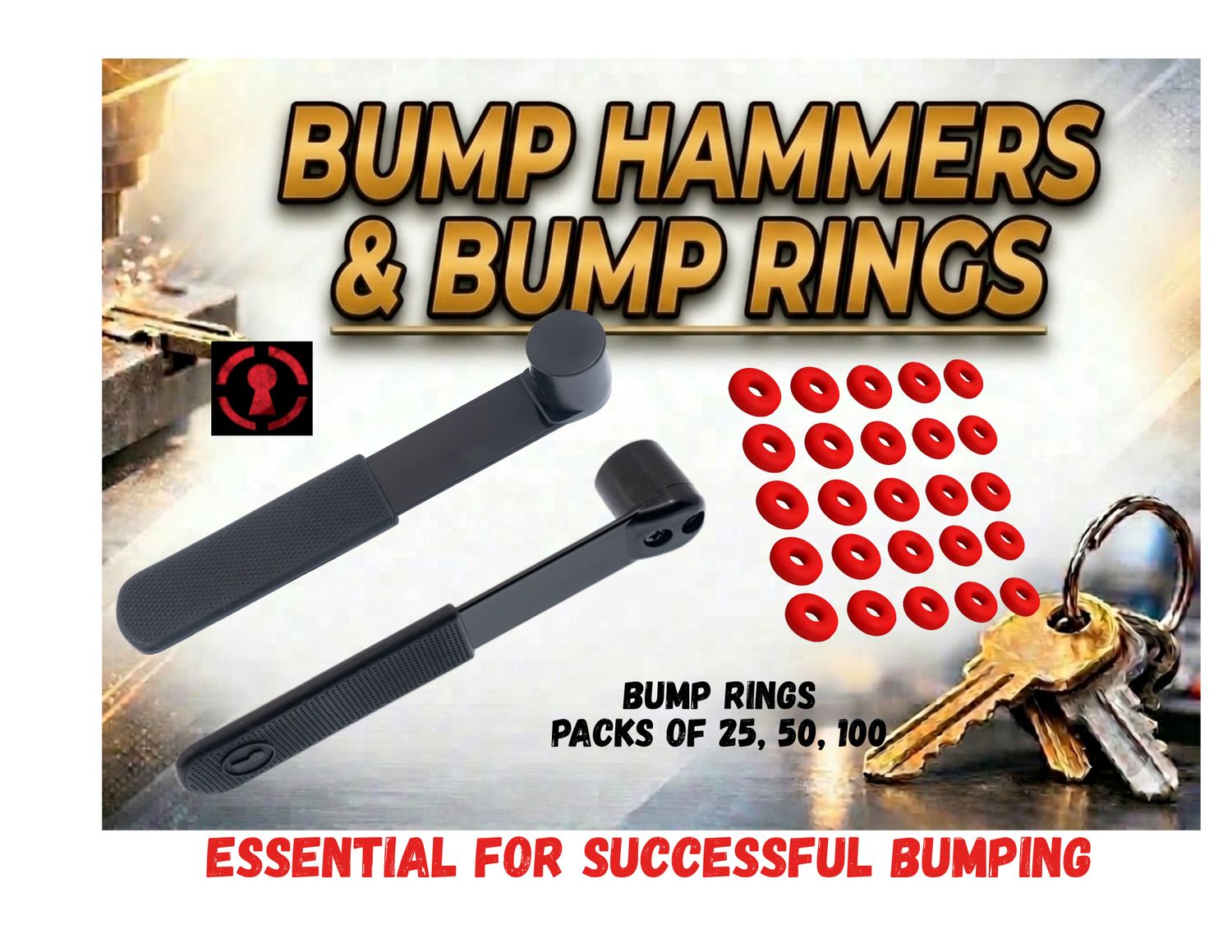
Sparrows Bump Hammers & Shock Absorption Bump Rings
C$20
25 Bump Rings
50 Bump Rings
100 Bump Rings
In stock
1
Product Details
🔴Sparrows Bump Hammer
Introduction
The Sparrows Bump Hammer is a semi-rigid percussive tool designed specifically for use with bump keys.
Successful key bumping requires a precise balance of timing, force, and rebound. The striking tool plays an important role in achieving this balance. Too little force will simply push the key pins downward without transferring energy to the driver pins. Too much force can damage the lock or the key and may introduce unnecessary lateral shock that interferes with proper pin movement.
The Sparrows Bump Hammer has been carefully designed to deliver the ideal balance of mass and flexibility, allowing energy to be transferred efficiently while maintaining control. Its semi-rigid spine provides a quick recoil after each strike, making it suitable for rapid, controlled bumping without unnecessary stress on the lock or key.
Key Features
Perfectly Balanced
Engineered to deliver the correct amount of striking force when using bump keys.
Tuned Rebound
Provides optimal rebound for quick, repeated strikes while helping reduce wear on keys and locks.
Optimized Design
Lightweight, durable, and purpose-built for controlled bump key operation.
Pack Contents
1 × Sparrows Bump Hammer
Technical Specifications
Dimensions:
21 × 3 × 3 cm
Important Notice
This tool is intended for professional locksmiths, training, and educational purposes only. Always use responsibly and only on locks you own or have permission to service.
What Are Bump Rings (Rebound Rings)?
Remember "Bump Rings" Wear Out Quickly. So Have Extra's on Hand
A bump ring, sometimes called a rebound ring, is a small rubber or silicone ring placed on a key near the shoulder of the key blade.
It is commonly used when performing lock bumping demonstrations or training to help control the movement of the key inside the lock.
What the Ring Does
The ring acts as a small shock absorber between the key and the lock cylinder.
When pressure is applied to the key and it is lightly struck, the ring allows the key to spring back slightly instead of remaining fully inserted in the lock.
This small rebound movement helps maintain the proper spacing between the key cuts and the lock pins.
Why Bump Rings Are Used
Bump rings provide several benefits:
Improves control
The ring keeps the key from staying fully seated in the cylinder.
Creates consistent spacing
It helps maintain the correct distance between the key and the pins.
Protects the lock and key
The rubber ring absorbs part of the impact.
Allows repeated use
Keys return to the correct position automatically after each strike.
Where the Ring Is Installed
The bump ring is placed:
• On the key blade
• Directly behind the key shoulder
• Between the key head and the lock face
When inserted into the lock, the ring sits against the front of the cylinder, holding the key slightly outward.
Common Materials
Most bump rings are made from:
• Rubber
• Silicone
• O-rings
These materials provide the right amount of flexibility and rebound.
Typical Size
Most locksmiths use rings approximately:
3 mm – 5 mm thick
The exact size may vary depending on the key type.
Important Note
Bump rings are generally used by locksmiths, trainers, and security professionals for demonstration, training, and lock testing purposes.
_____________________________________
🔴 Bump Rings (Rebound Rings) – Features & Attributes
Bump rings, also known as rebound rings, are small rubber or polymer spacers used with bump keys to improve control, performance, and protection during the bumping process.
⚙️ Core Function
- Creates a small gap between the key shoulder and the lock face
- Allows the key to rebound slightly after impact
- Helps transfer kinetic energy efficiently to the pins
🔑 Key Attributes
1. Shock Absorption
- Cushions the impact from the bump hammer
- Reduces stress on both the key and lock components
2. Controlled Rebound
- Acts like a spring to push the key back slightly after striking
- Prevents the key from staying fully inserted
3. Improved Energy Transfer
- Optimizes the upward movement of driver pins
- Increases chances of achieving the shear line
4. Consistent Spacing
- Maintains a uniform bump distance every strike
- Helps beginners get repeatable results
5. Lock Protection
- Minimizes wear on:
- Key blade
- Pins
- Plug face
- Reduces risk of over-driving pins
6. Noise & Vibration Dampening
- Softens the “click” sound during bumping
- Reduces hand fatigue during repeated use
7. Universal Fit
- Fits most standard residential keyways:
- Schlage (SC1/SC4)
- Kwikset (KW1/KW10)
- Weiser (WR5)
- Yale (Y1)
- Stretchable material adapts to different key shoulders
8. Material Composition
- Typically made from:
- Rubber
- Silicone
- Polymer blends
- Designed for flexibility and durability
9. Color Coding (Optional)
- Some sets use colors to indicate:
- Different thickness levels
- Different hardness (soft vs firm)
- Many are simply standard red/pink with no coding
📏 Common Specs
- Inner Diameter: fits snug on key shaft
- Outer Diameter: small enough to not interfere with keyway
- Thickness: typically 1–3 mm
🧰 Why They Matter
Without a bump ring:
- The key can sit too deep
- Energy transfer becomes inconsistent
- Higher risk of damaging the lock or key
With a bump ring:
- More consistent strikes
- Better success rate
- More professional control
Remember "Bump Rings" Wear Out Quickly. So Have Extra's on Hand
Save this product for later
Sparrows Bump Hammers & Shock Absorption Bump Rings
Display prices in:CAD